
This rebuild is still fresh. For now, please only view the desktop version.
As SmartHQ expanded to support new appliance categories and experimental digital features, each NPI introduced unique requirements that risked fragmenting the platform. Without deliberate integration, new products could introduce one-off components, inconsistent interaction patterns, and long-term UX debt.
The challenge was not visual novelty, but system coherence: ensuring new experiences felt native to SmartHQ while still meeting product-specific needs, documentation constraints, and development realities.
I approached NPI integration as a system design problem rather than a series of standalone UI tasks. The goal was to reuse existing design system patterns wherever possible, introduce new components only when necessary, and maintain a consistent mental model across products.
Across initiatives, my approach focused on:
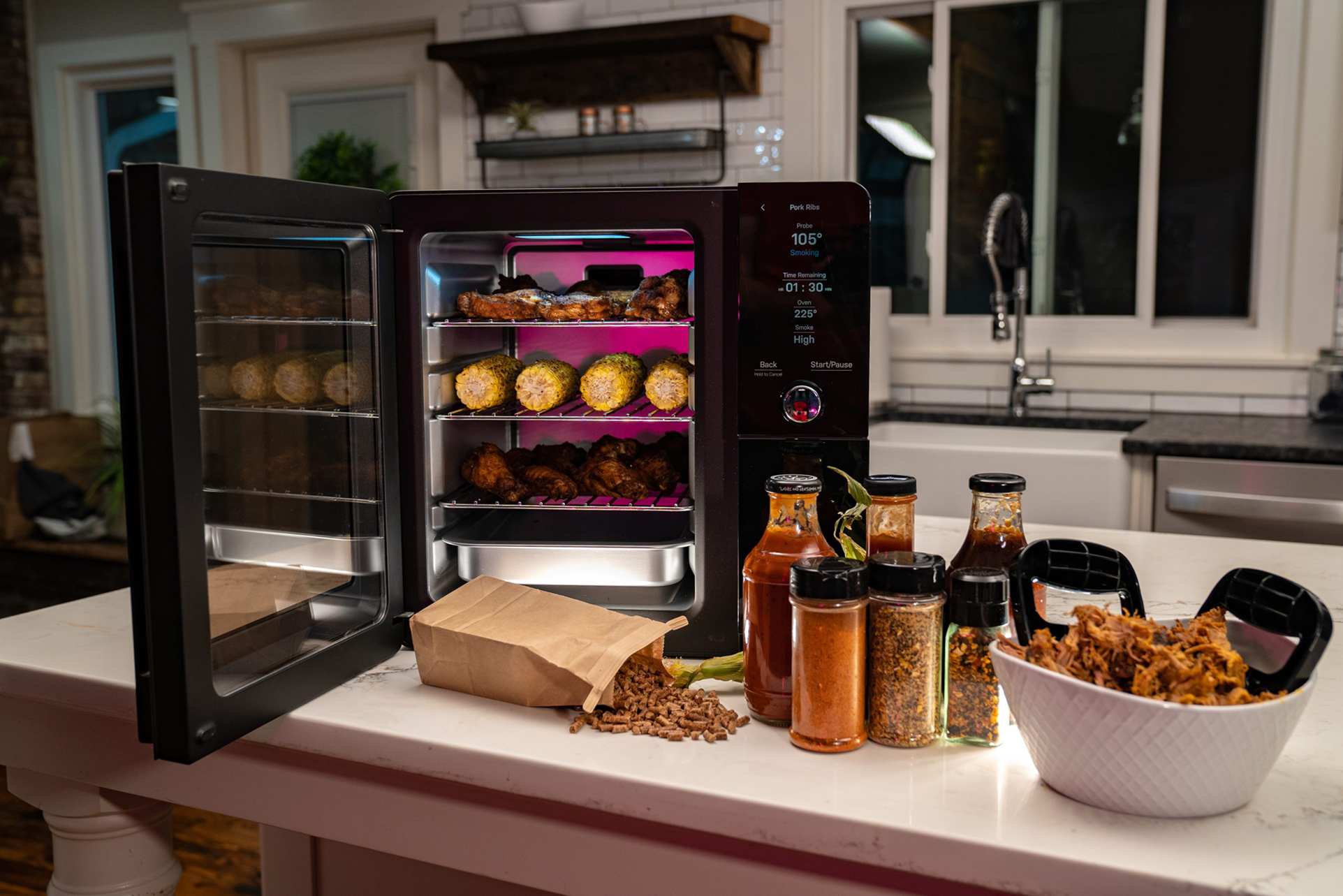
- Translating physical product behavior and documentation into platform-appropriate UX patterns.
- Designing information architecture that aligned with existing SmartHQ conventions.
- Creating low- to mid-fidelity artifacts early to support engineering feasibility discussions.
- Treating exploratory work as a way to define boundaries and future direction, not premature commitment.
This work resulted in a set of integration proposals spanning multiple NPIs, each contributing differently to the evolution of the SmartHQ ecosystem.
Key contributions included:
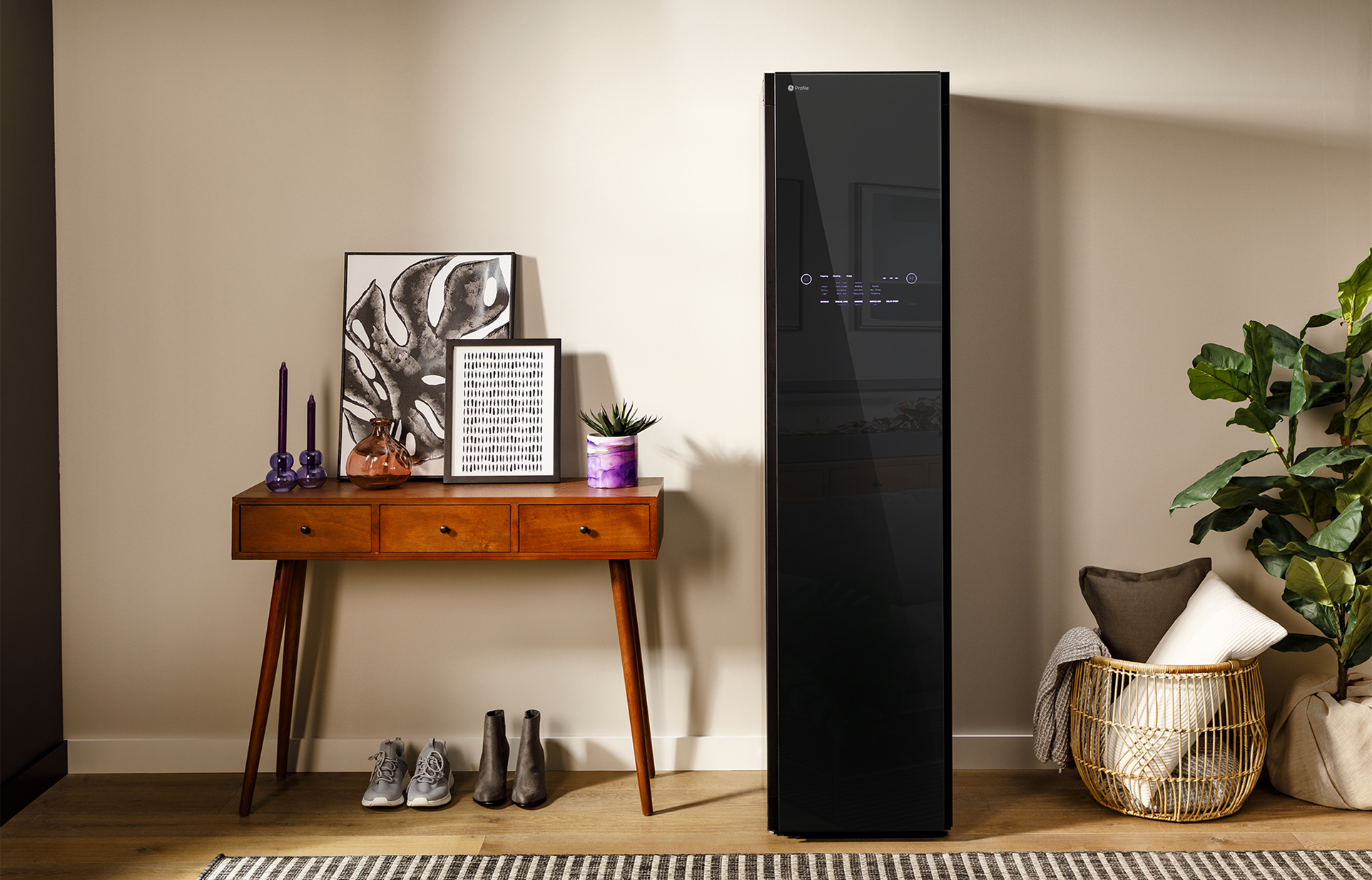
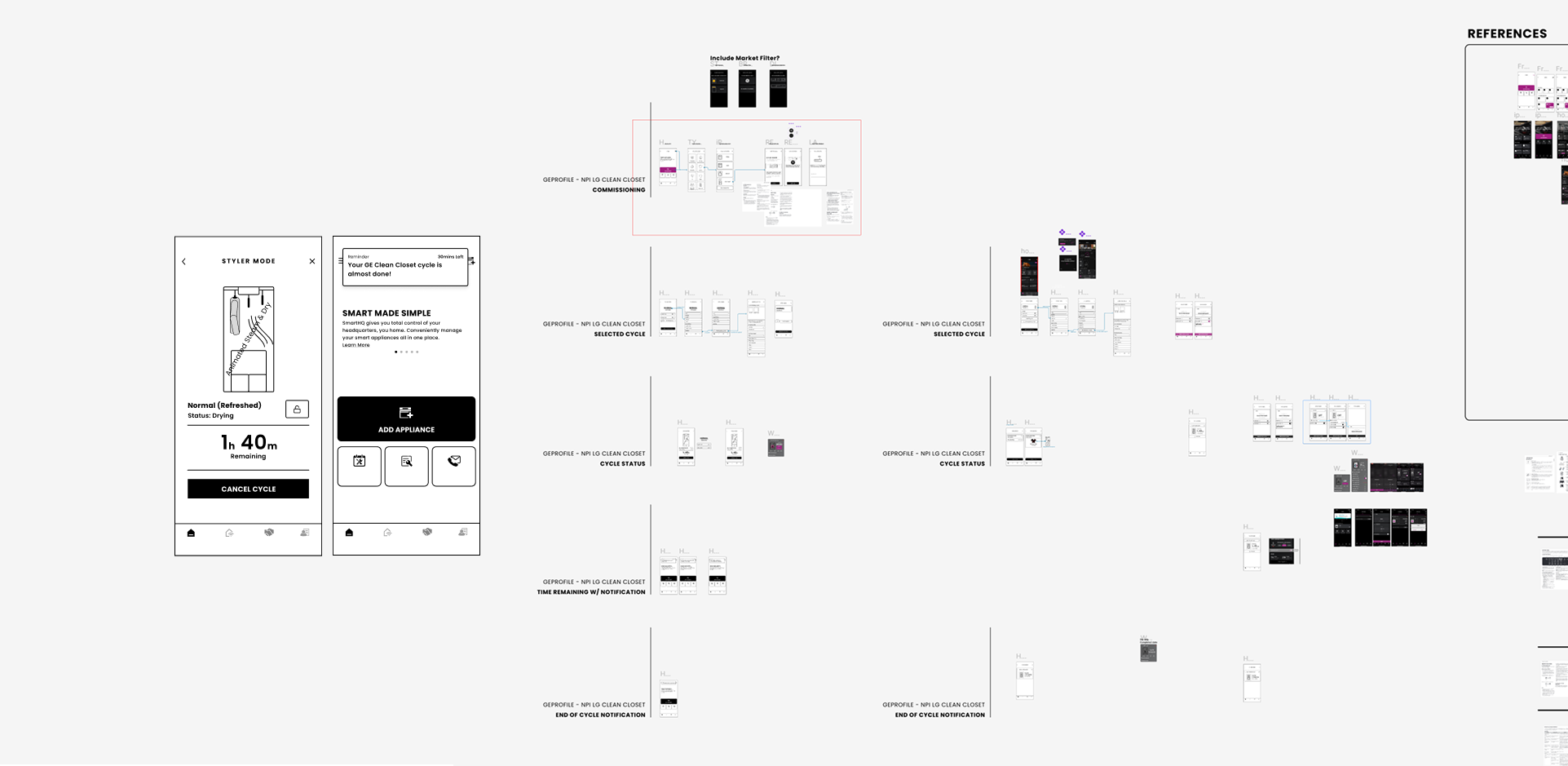
- Constructing low-fidelity information architecture and wireframes to integrate new appliance categories.
- Adapting existing design system components to support product-specific behaviors without introducing unnecessary fragmentation.
- Designing exploratory mid- to high-fidelity concepts to evaluate feasibility and long-term platform impact.
- Delivering production-ready UI elements when scope required direct execution.
Key decisions included:
- Structuring appliance controls to align with existing SmartHQ mental models.
- Reusing established components to avoid unnecessary design system expansion.
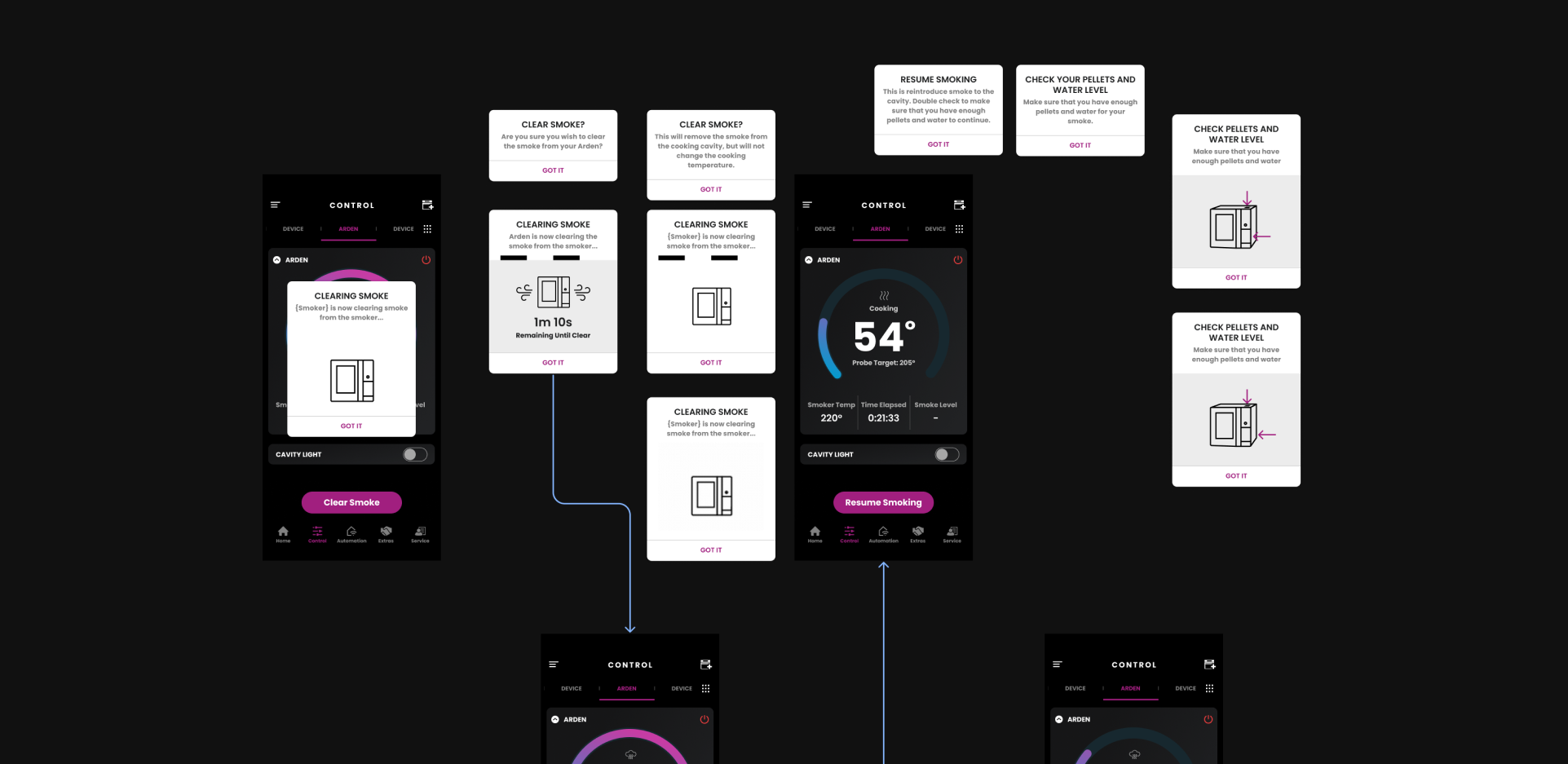
- Mapping product documentation directly to in-app flows to ensure clarity and accuracy.
- Iterating designs through engineering feedback to confirm feasibility before advancing fidelity.

Key contributions included:
- Designing end-to-end concept flows for AI-assisted recipe generation.
- Visualizing integration points within SmartHQ while considering platform saturation.
- Supporting internal discussions around feasibility, scope, and long-term product direction.
Key contributions included:
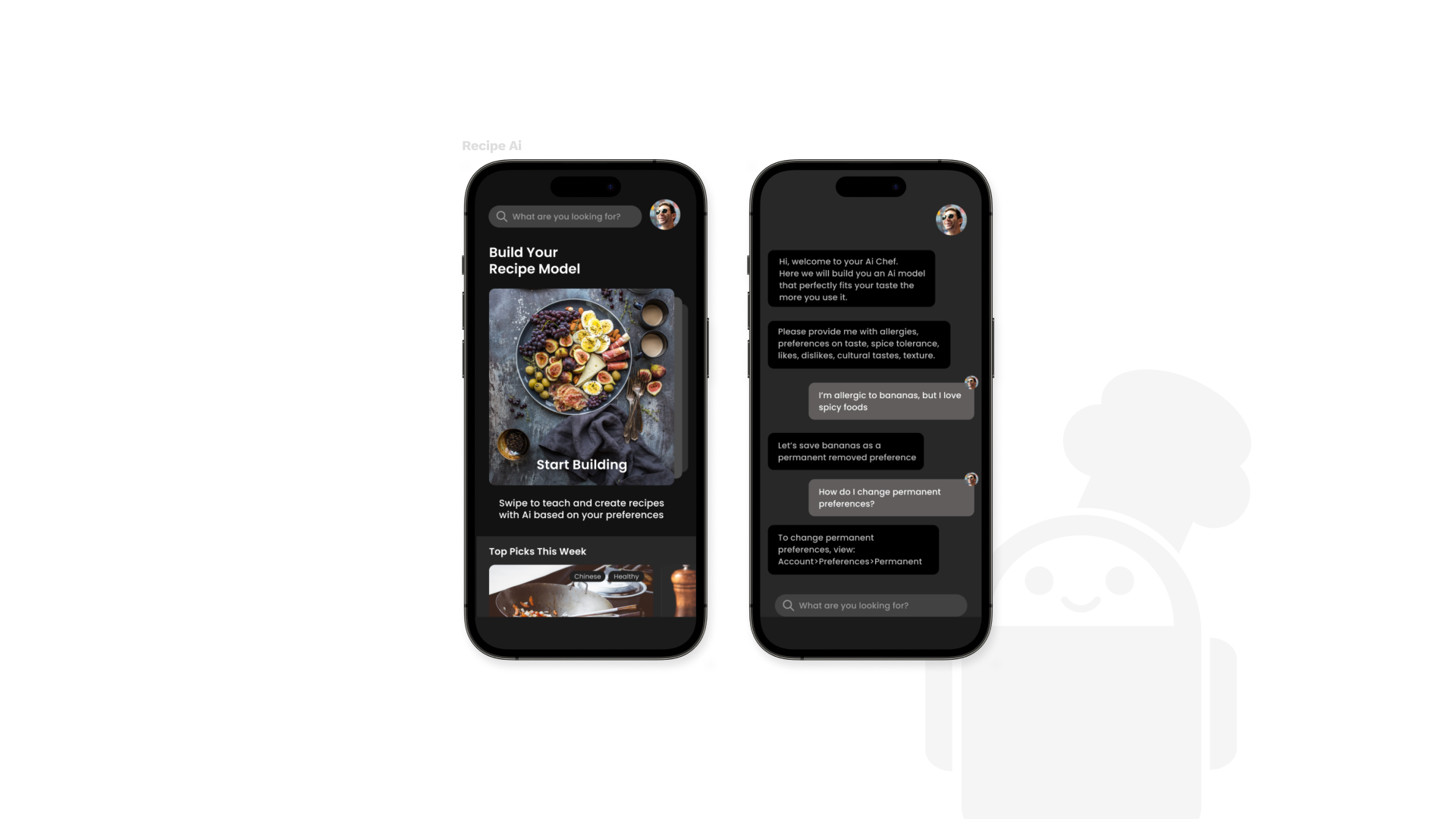
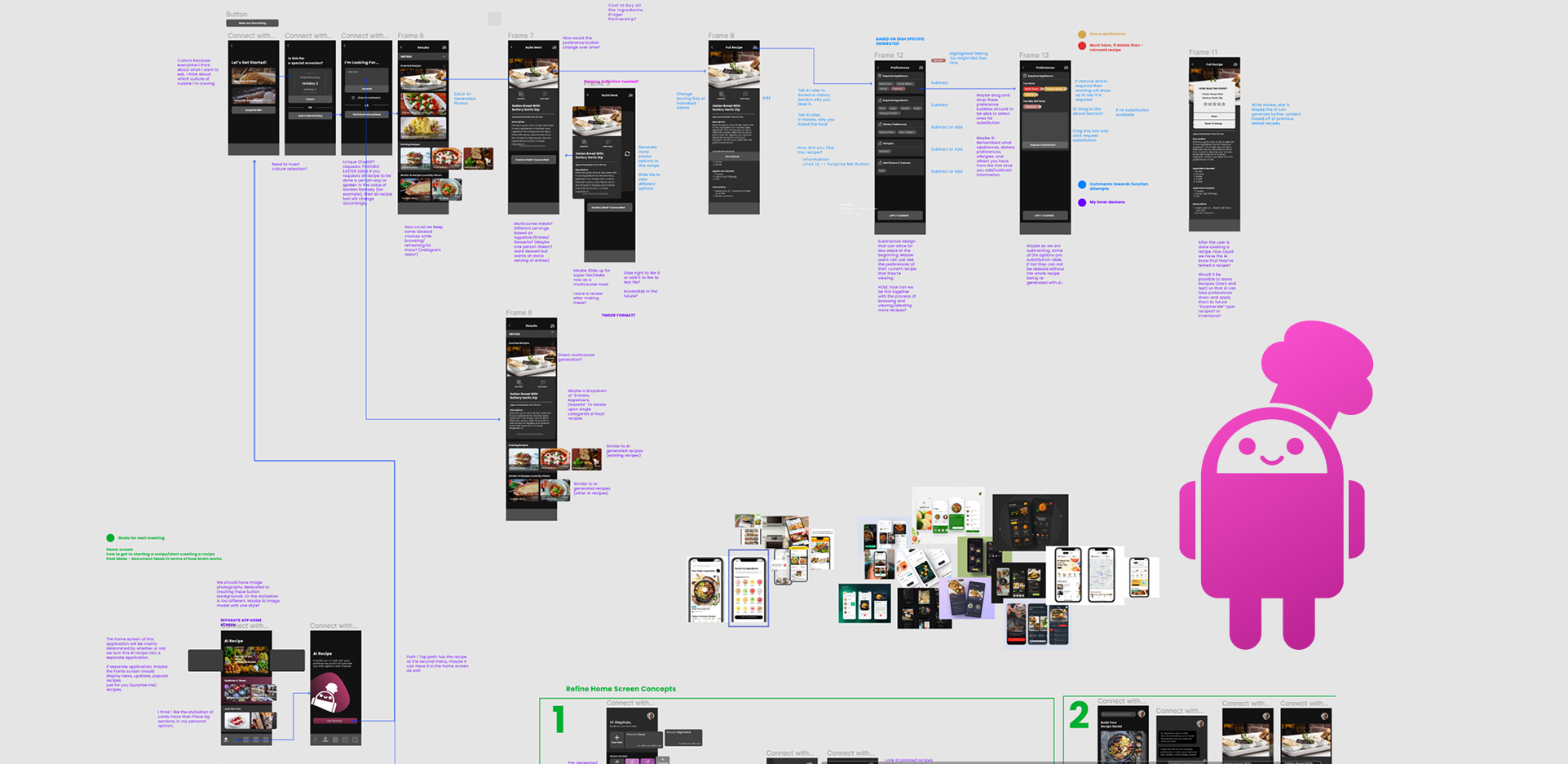
- Designing end-to-end concept flows for AI-assisted recipe generation.
- Visualizing integration points within SmartHQ while considering platform saturation.
- Supporting internal discussions around feasibility, scope, and long-term product direction.
Scroll Story
©2025 timothy yue li · all rights reserved · timyueli@gmail.com
Last Updated: 2025