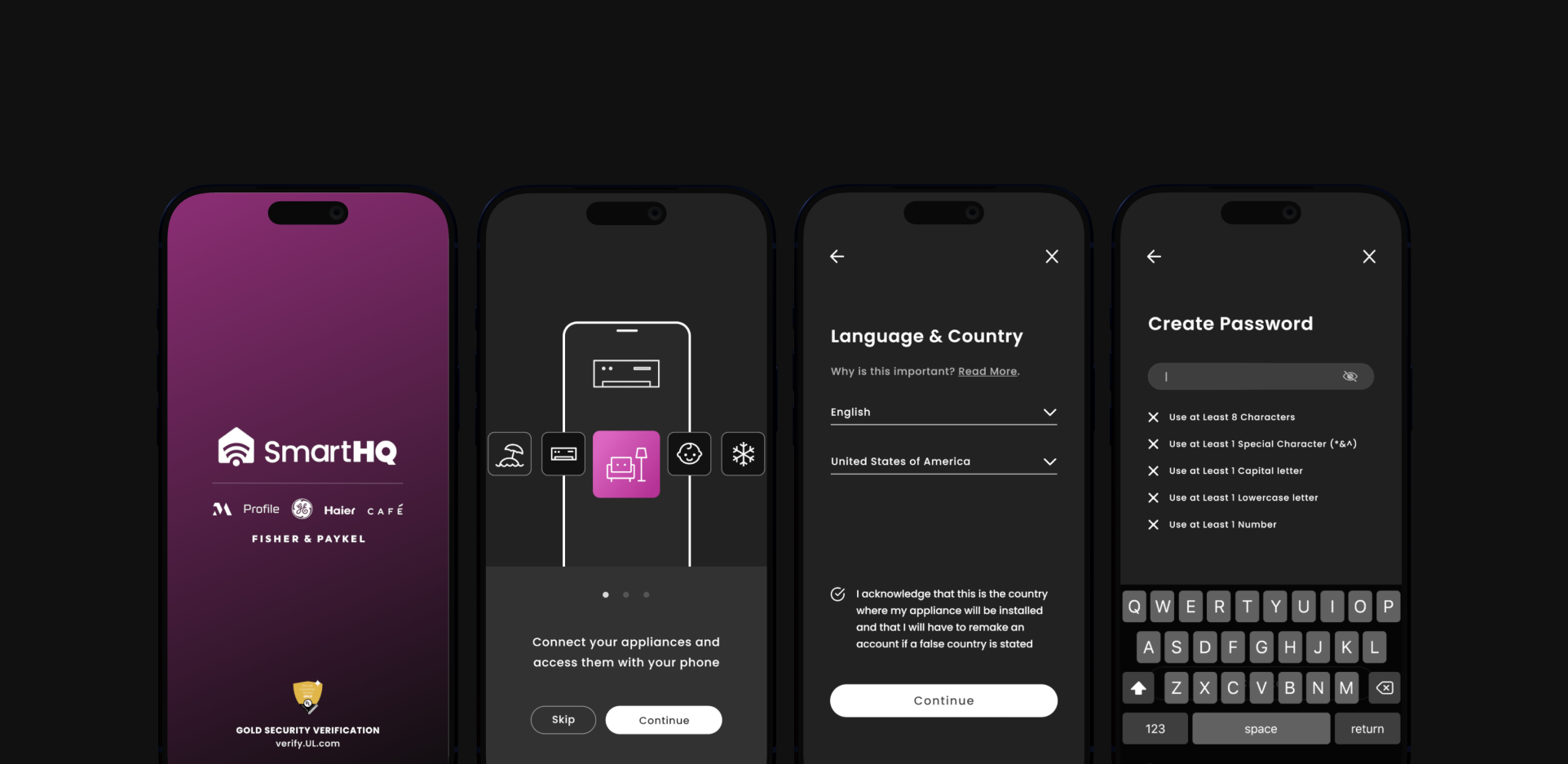
This screen isn’t optimized yet.

This rebuild is still fresh. For now, please only view the desktop version.

Tags
Enterprise Platform · Onboarding Strategy · Accessibility-Led Design · UX Strategy

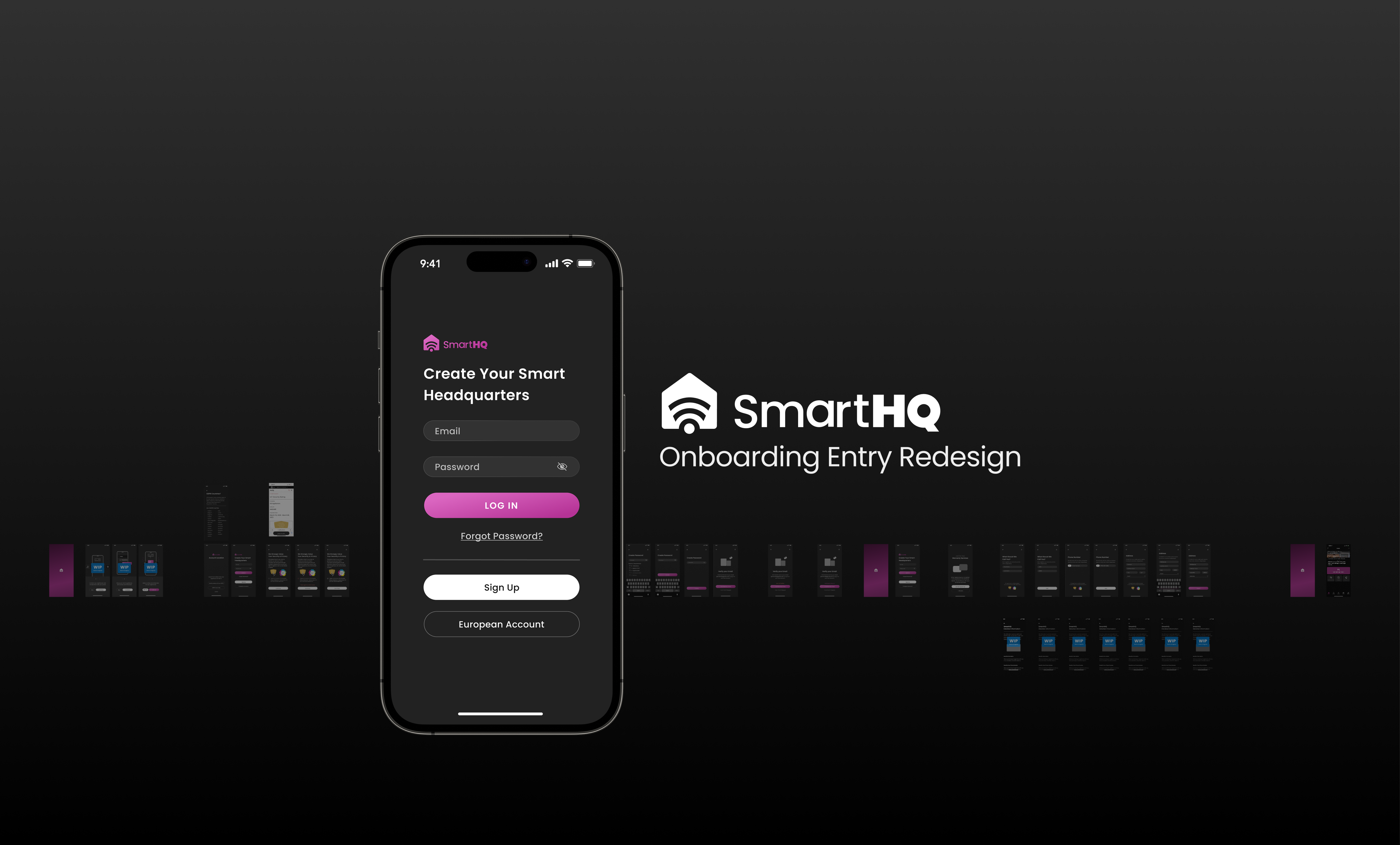
SmartHQ Onboarding
Entry Redesign.

01

5

Overview.

SmartHQ serves as the primary mobile interface for managing connected appliances across multiple GE Appliances brands. Given its scale and reach, onboarding plays a critical role in shaping user trust and long-term engagement.

While working on SmartHQ, I independently evaluated the app from a first-time user perspective and identified onboarding as a foundational point of friction. This project became a focused effort to assess onboarding structure, uncover systemic usability issues, and propose a clearer, more intentional entry experience that better aligned with user expectations and accessibility standards.

Project Context.
Role.
Initiative-led UX Investigation & Concept Design.
Team & Stakeholders.
UX Designers, Design Leadership, Product Stakeholders, Engineering.
Product / Platform Reach.
SmartHQ mobile application supporting a cross-brand appliance ecosystem.
Design Tools & Libraries.
Figma, iOS Design Guidelines, Google Material Design, Samsung Developer, WCAG & ADA Accessibility Checkers.
Research Methods.
UX Audits, Heuristic Evaluation, App Store Review Analysis.
Time Frame.
2022 couple quarters.
Outcomes & Impact.

Impact Indicators

- Identified and mapped a 14-screen onboarding flow with mixed required and optional inputs.

- Proposed a phased onboarding structure that deferred optional data collection until post-login.

- Improved information hierarchy and scannability across first-time entry screens.

- Addressed multiple accessibility issues related to contrast, spacing, and touch targets.

redesign aimed to reduce drop-off risk by 20% by removing unclear terminology and onboarding painpoints. Focusing on bringing

Validation Signals

- Multiple interface inconsistencies and copy errors corrected following review.

- Design leadership aligned on onboarding as a long-term improvement opportunity.

- Concepts used to support internal discussions with engineering and product teams.

redesign aimed to reduce drop-off risk by 20% by removing unclear terminology and onboarding painpoints. Focusing on bringing

Business Relevance

- Reduced onboarding friction directly supports higher activation and connected-appliance adoption.

- Clearer onboarding helps prevent unnecessary support calls and early drop-off.

redesign aimed to reduce drop-off risk by 20% by removing unclear terminology and onboarding painpoints. Focusing on bringing

Overview Visuals.

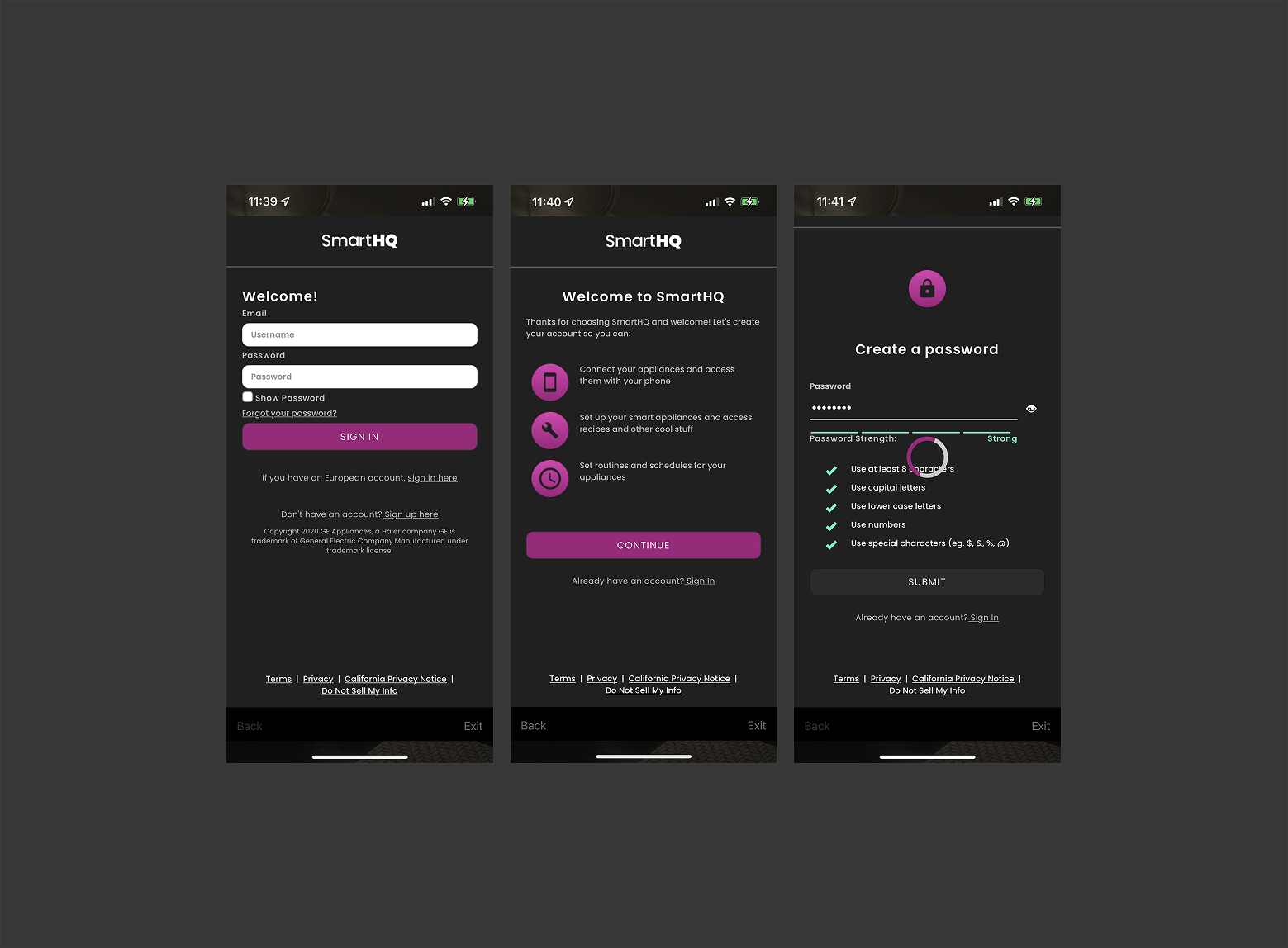
Before.
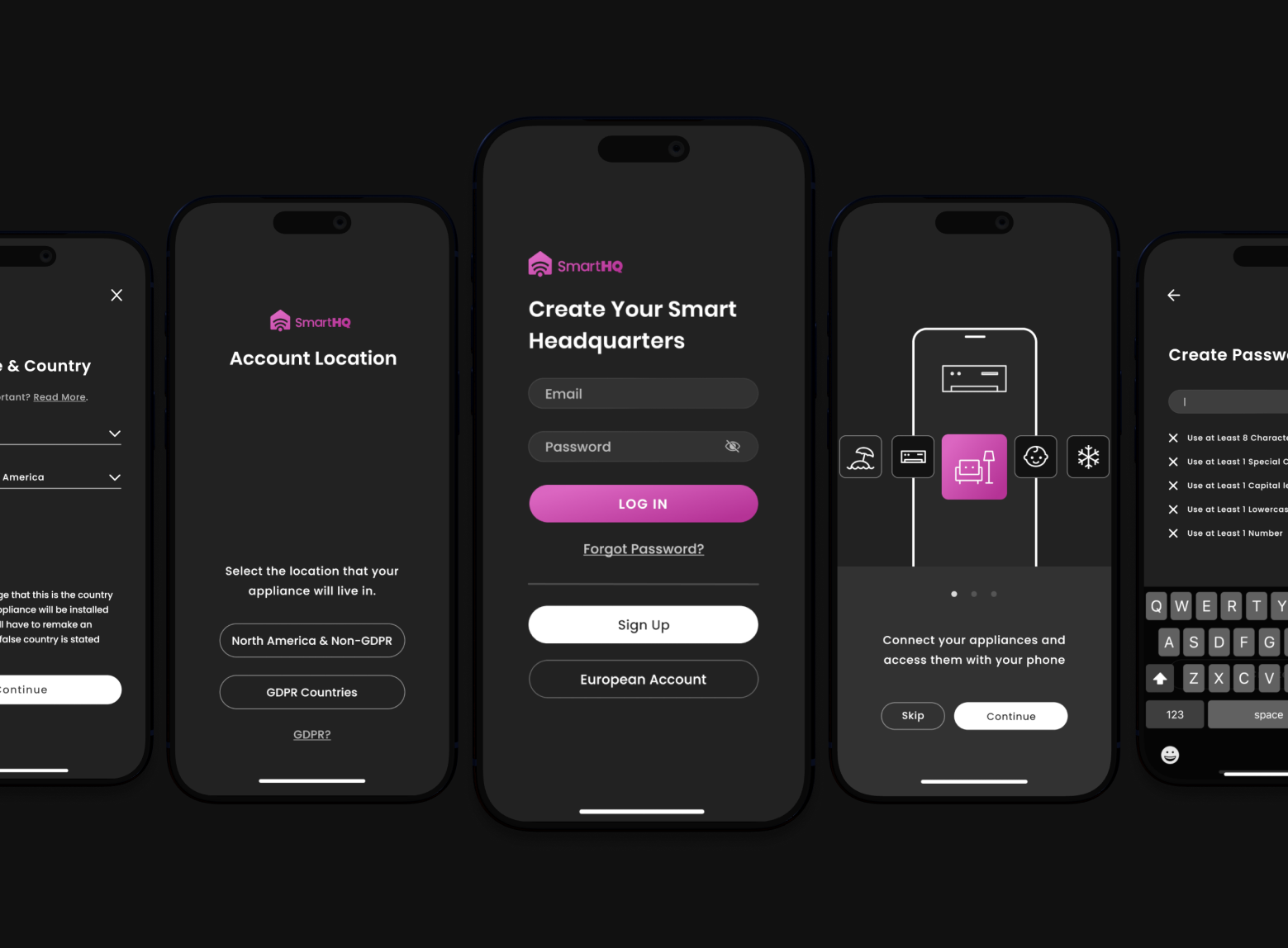
After.
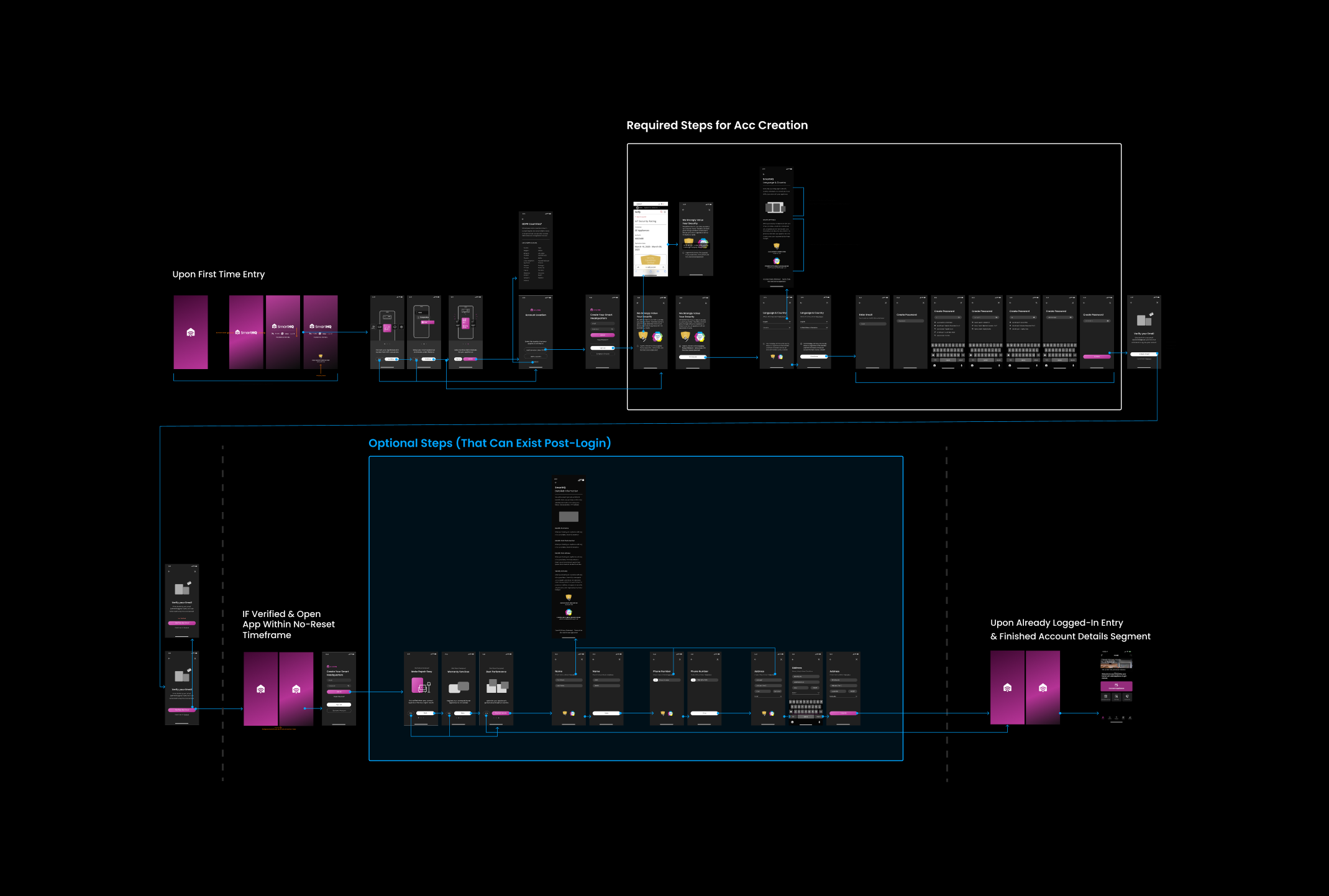
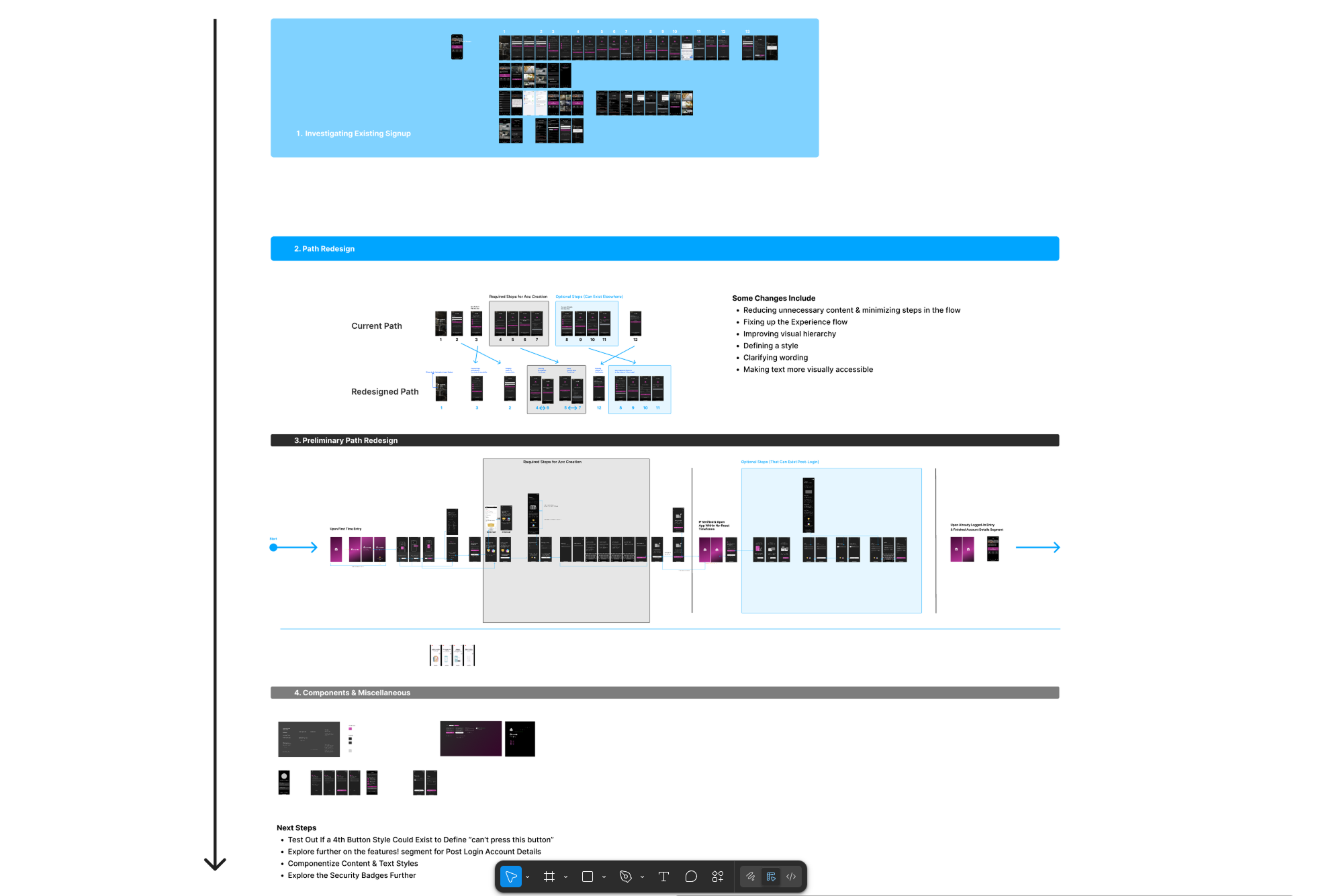
Onboarding flow with annotations.

Process Journey.

Framing the Problem at a System Level.

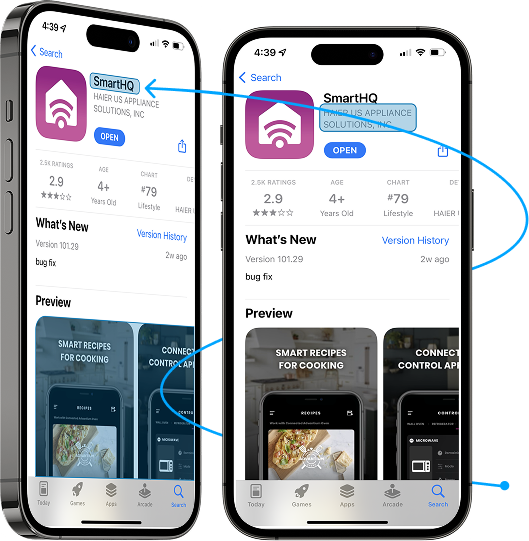
Rather than evaluating onboarding as a sequence of isolated screens, I approached the experience as a complete system that begins before a user ever opens the app. Initial investigation focused on searchability, user sentiment, and expectation-setting across both iOS and Android platforms.

This perspective helped inform how terminology, structure, and sequencing could either support or undermine first-time clarity.

Establishing Visibility Into the Existing Experience.

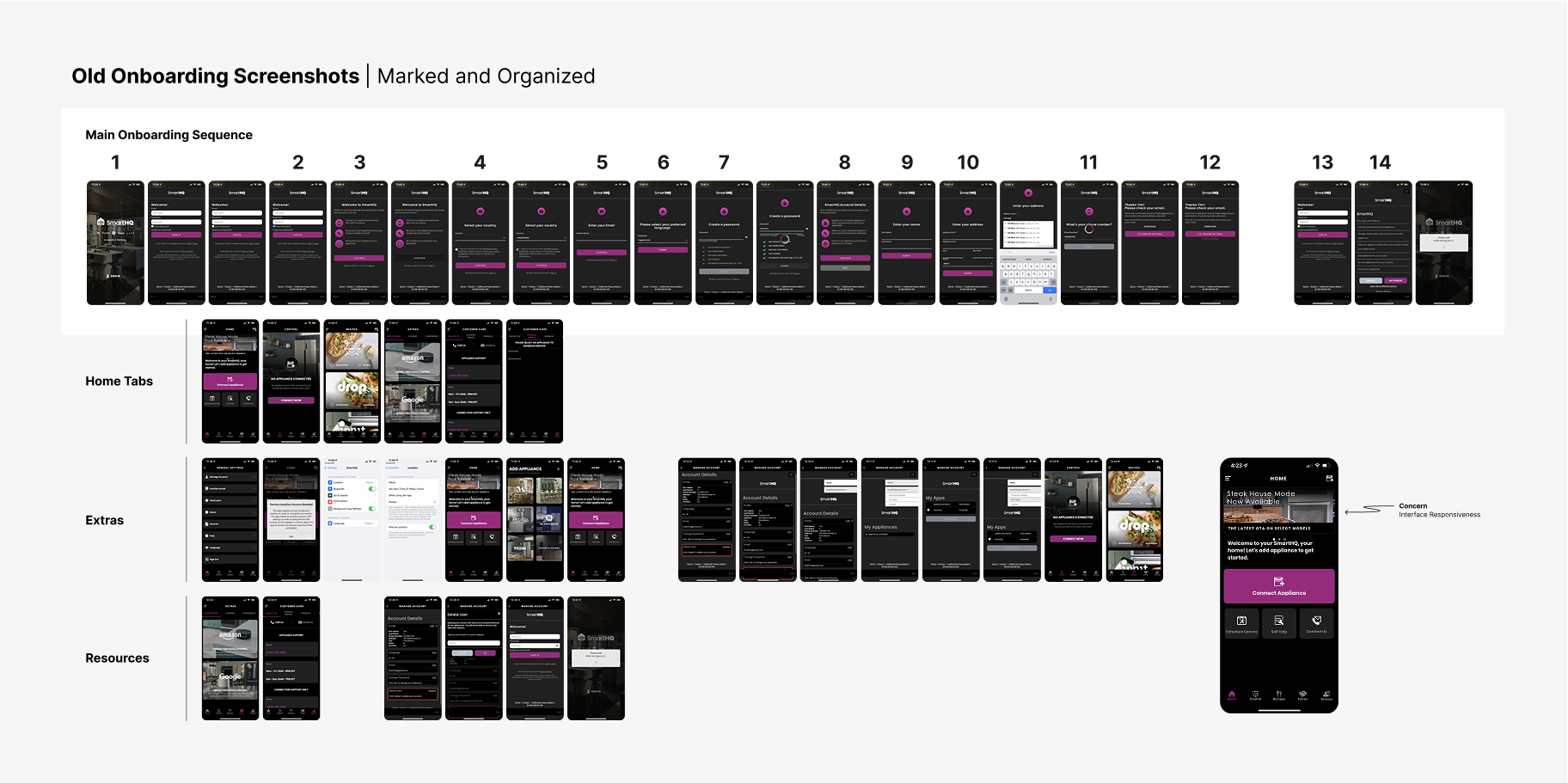
The existing onboarding flow was mapped end to end to understand how individual decisions compounded across the journey. This revealed a fourteen-screen experience with inconsistent progression, unclear intent, accessibility gaps, and limited articulation of value prior to requesting user commitment.

Viewing the flow holistically made it clear that the problem was structural rather than cosmetic.

Original SmartHQ onboarding screens sorted by 14 primary instances.
Reorganizing Information Architecture Around User Intent.

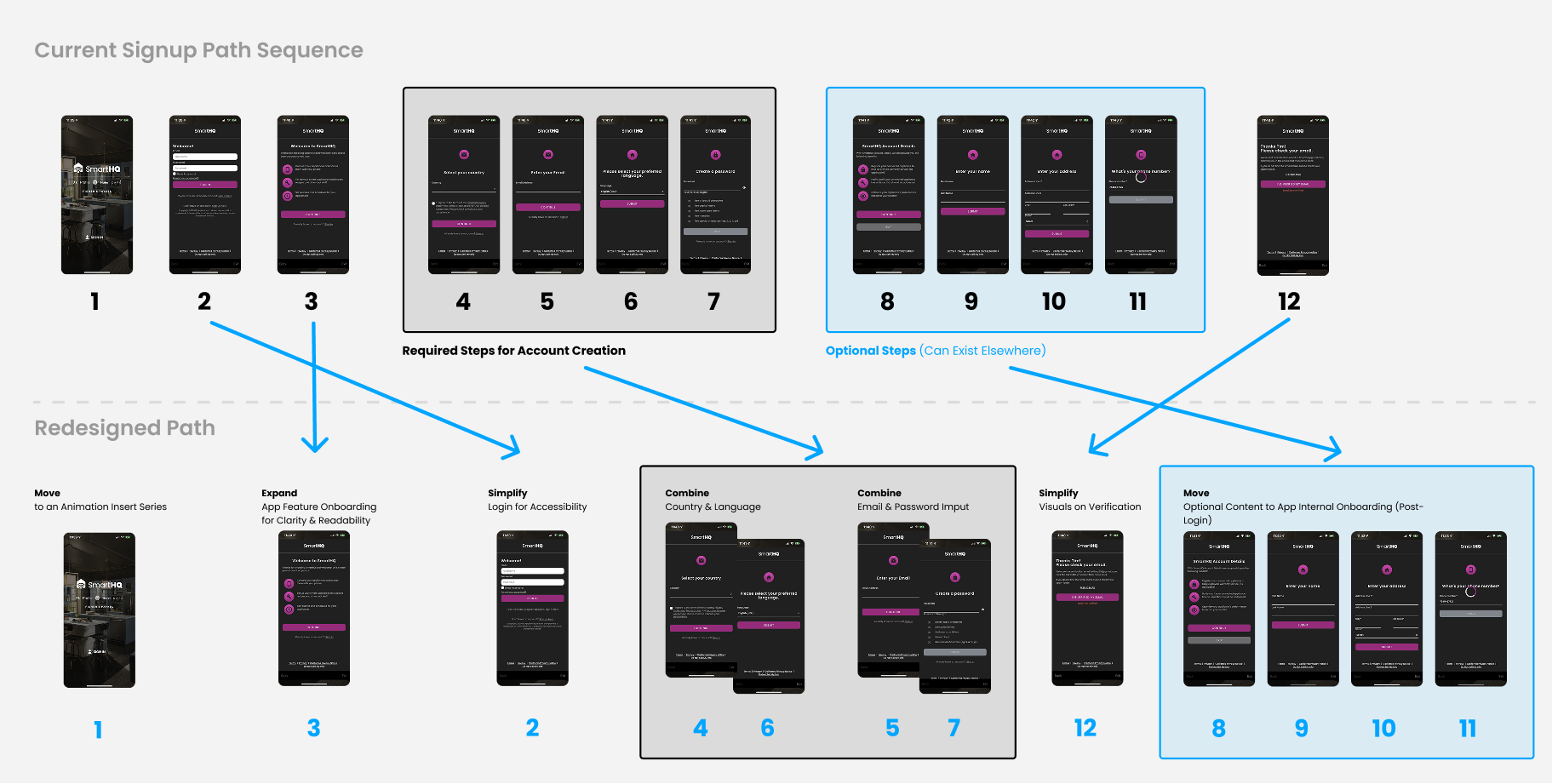
A closer review showed that related information was frequently fragmented, while unrelated actions were grouped together. Content distribution lacked clear prioritization, increasing cognitive load and reducing scannability.

The onboarding structure was reframed around user comprehension, emphasizing value communication, logical grouping, and incremental trust-building before introducing optional or sensitive inputs.

IA reorganization into relevant groupings.
Translating Structure Into Design Direction.

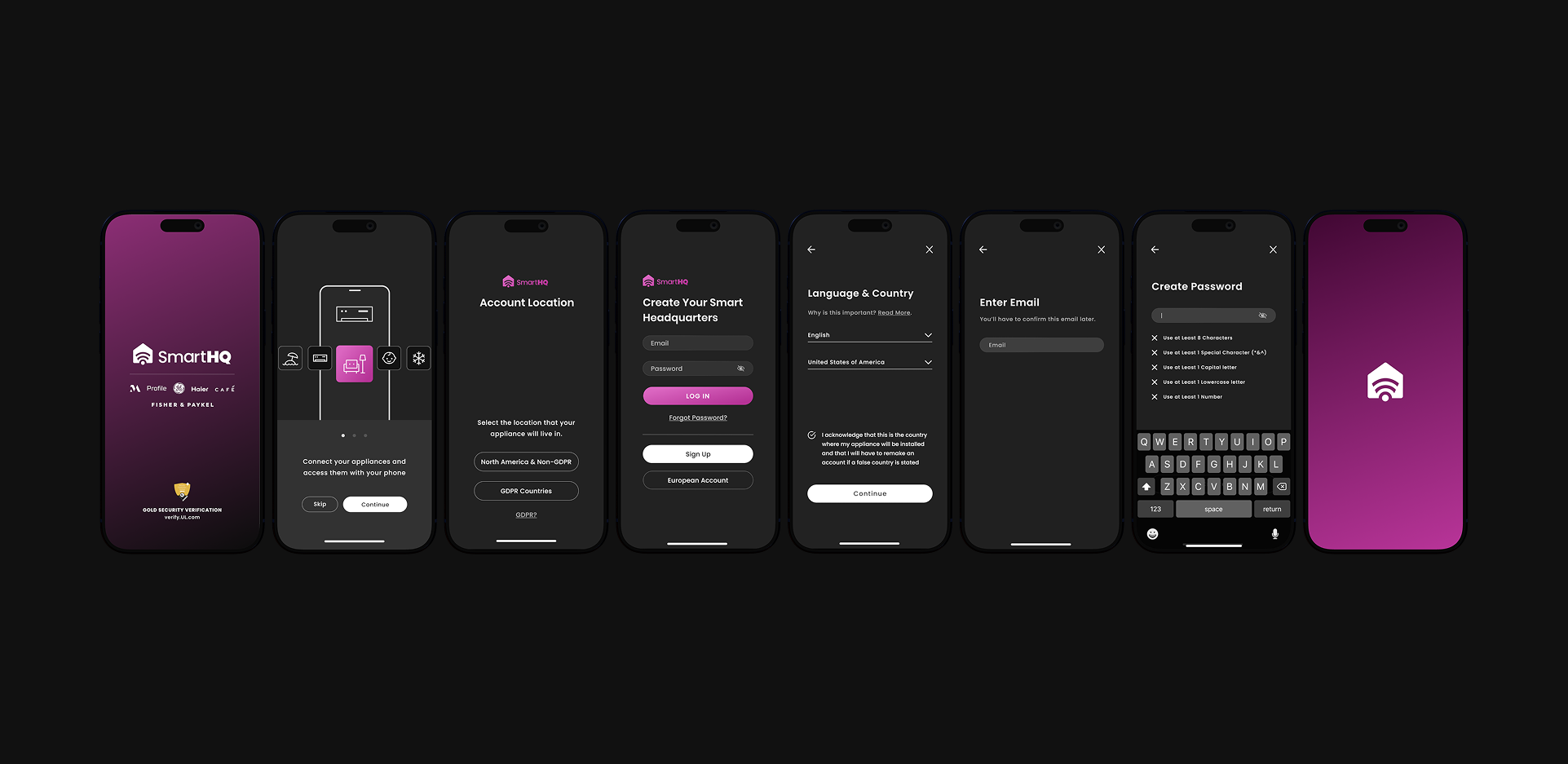
These decisions were translated into mid- to high-fidelity wireframes to demonstrate how clarity could be improved within existing constraints. Accessibility considerations, hierarchy, and layout simplification were incorporated to ensure the experience was readable, usable, and scalable.

Series of selected redesigned onboarding interfaces.
Iteration Process.

1.   Built 4 rounds of wireframes → refined based on feedback.
2.  Prioritized speed of iteration over perfection.
3.  Shared prototypes with peers and stakeholders for rapid input.

A screenshot of a section presented and iterated upon with the dev team. Section titled: "Meeting 8-11-2022 | Post Small Changes".
Impact Summary.

This project reframed SmartHQ’s onboarding experience as a critical entry point into a complex enterprise platform rather than a transactional setup flow. By identifying structural friction and proposing a clearer, more intentional onboarding direction, the work helped shift internal focus toward trust, clarity, and long-term product adoption.

Business Context.

Every appliance that fails to successfully connect through SmartHQ represents a missed opportunity. Effective onboarding not only enables customers to use their products as intended, but also increases lifetime value by making customers more likely to connect additional appliances over time.

Each connected device contributes valuable usage data, strengthens the smart appliance ecosystem, and supports future upsell opportunities. Reducing onboarding friction also helps prevent unnecessary call center support and product returns, directly protecting revenue while lowering operational and support costs.

Scroll Story

©2025 timothy yue li · all rights reserved · timyueli@gmail.com

Last Updated: 2025